
Skip to content
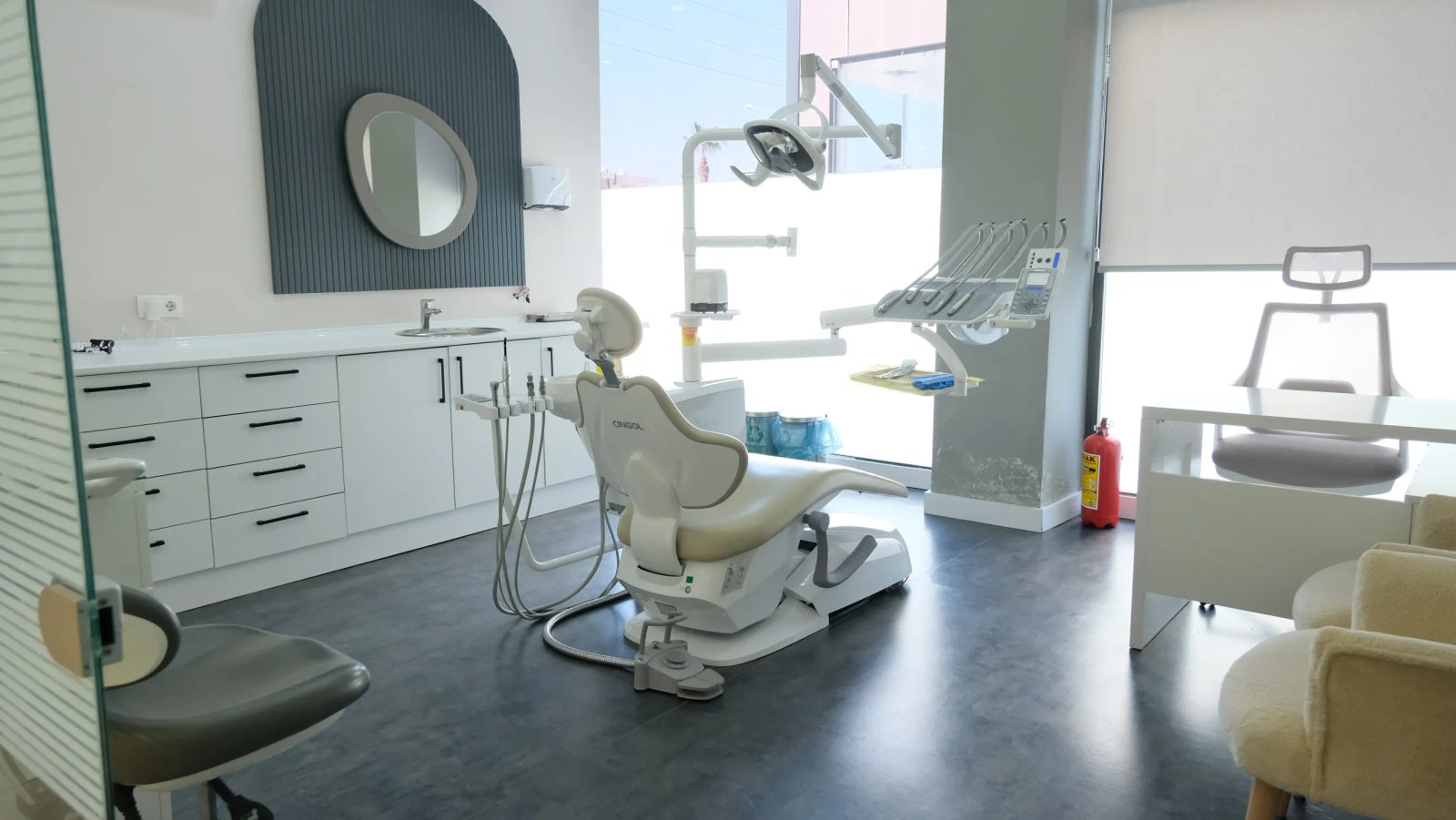
Dental treatment unit

Dental treatments in Mersin

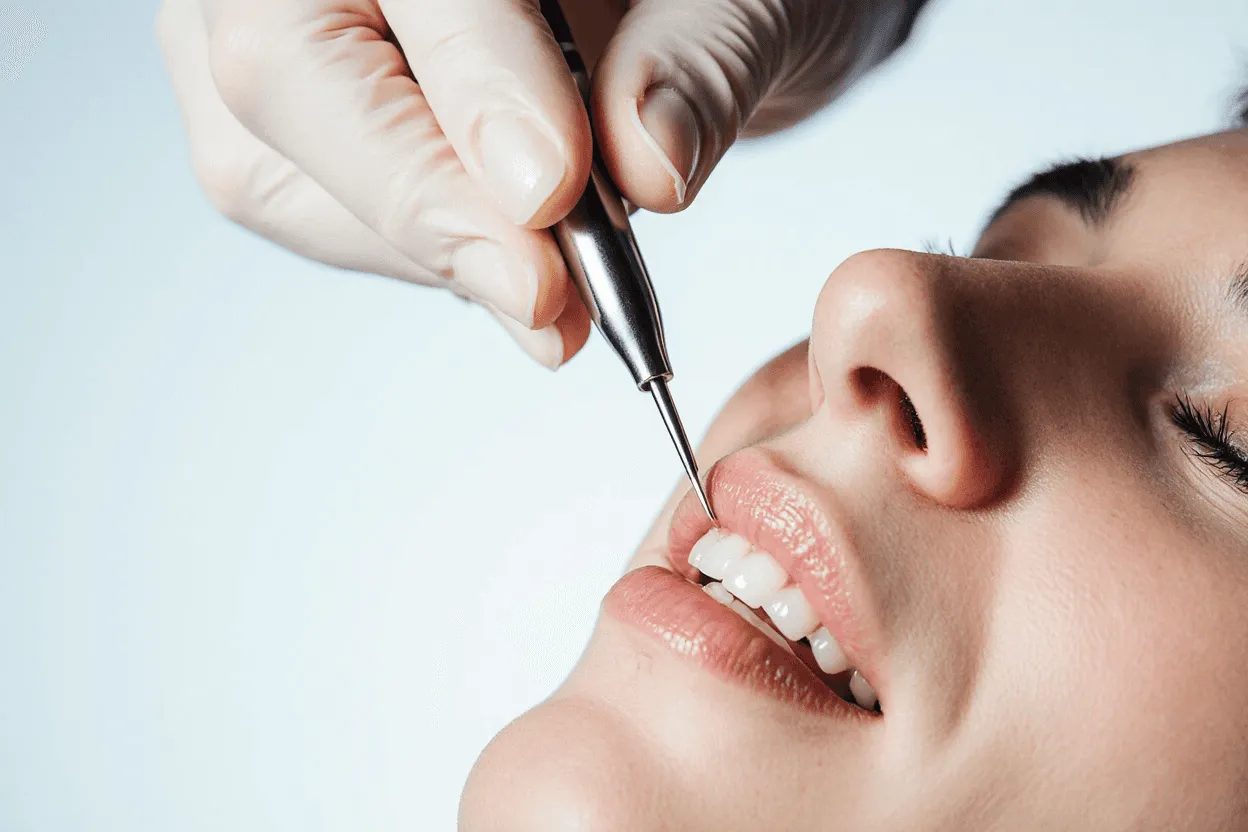
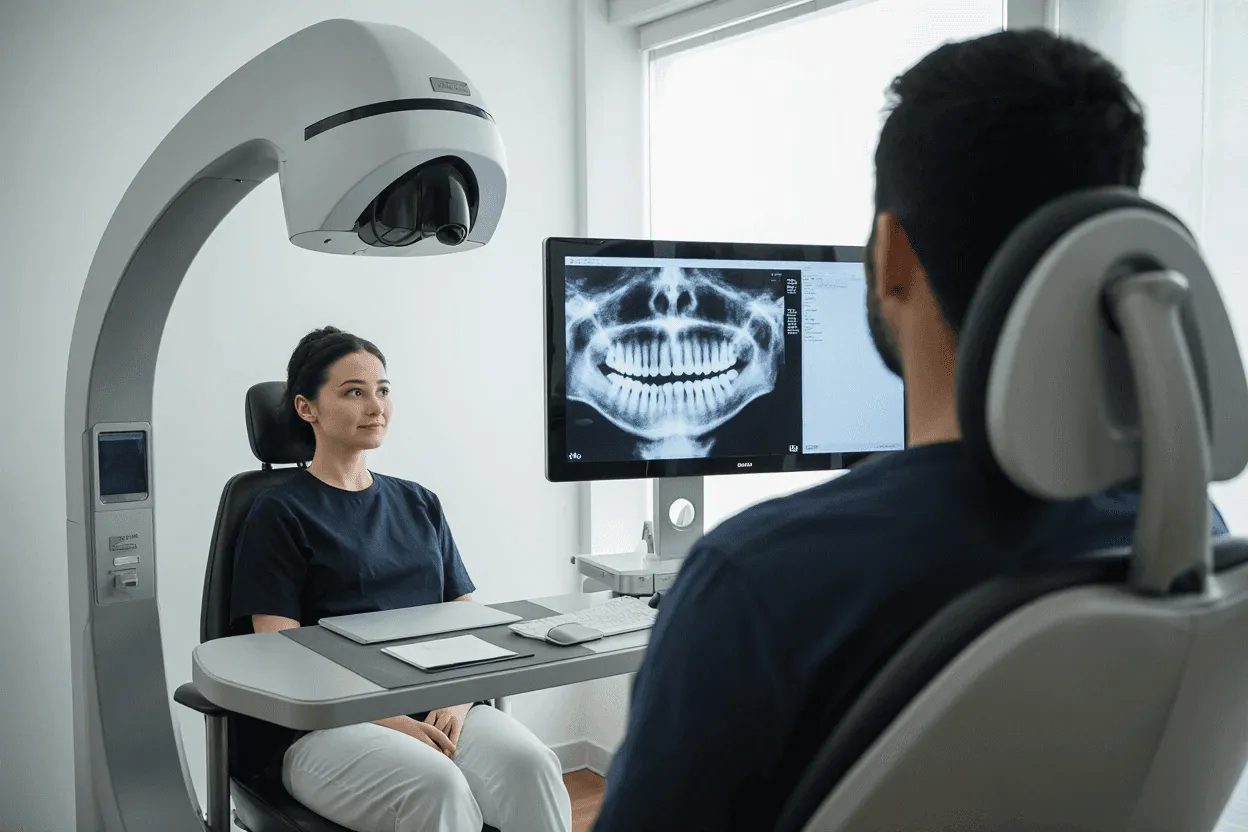
Dental X-ray examination

Oral Diagnosis and Radiology

Oral diagnosis is the process of identifying oral and dental conditions, and it is the basis of every treatment plan. The clinical examination is complemented, where needed, by radiographs such as panoramic or periapical X-rays, which show areas that cannot be seen during the examination. X-rays are taken only when clinically justified, and the type of imaging is chosen according to your situation.

  • Clinical examination
  • Panoramic radiography
  • Periapical radiography
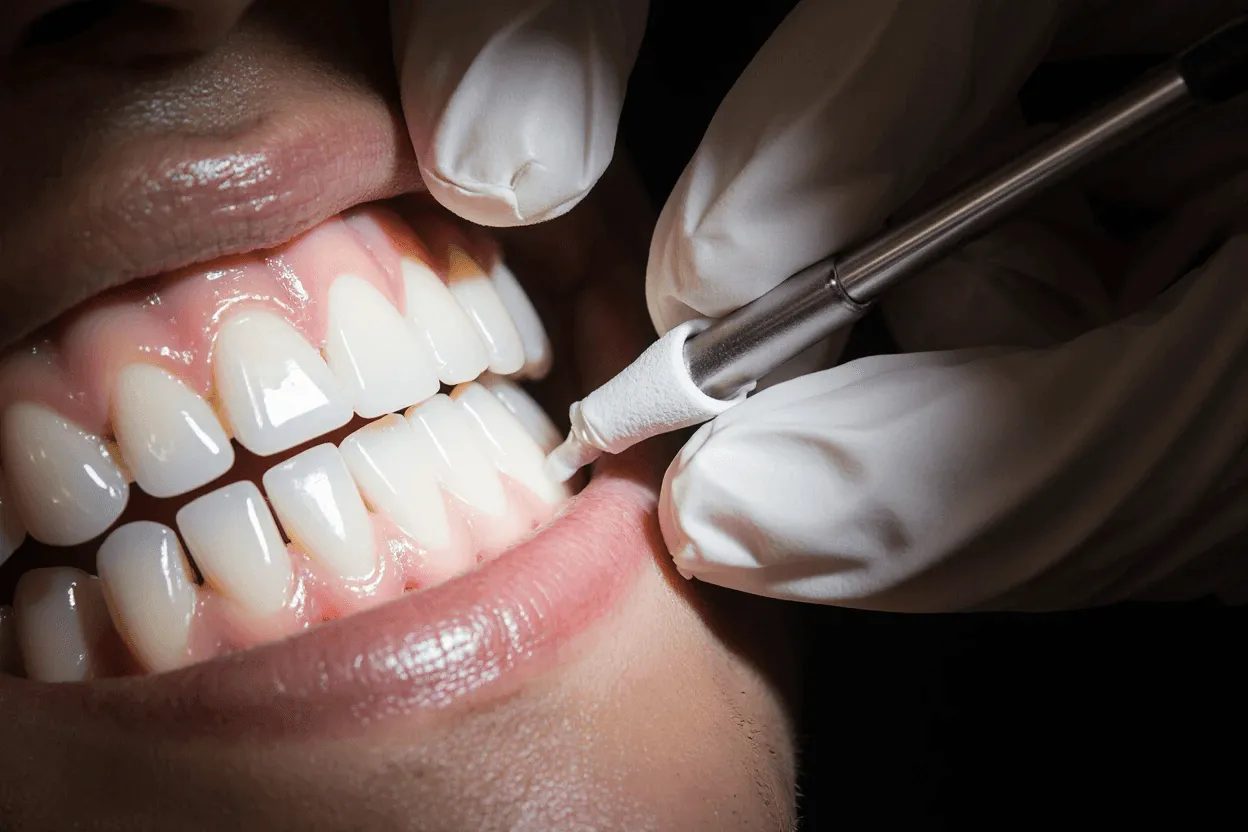
Teeth whitening

Teeth Whitening

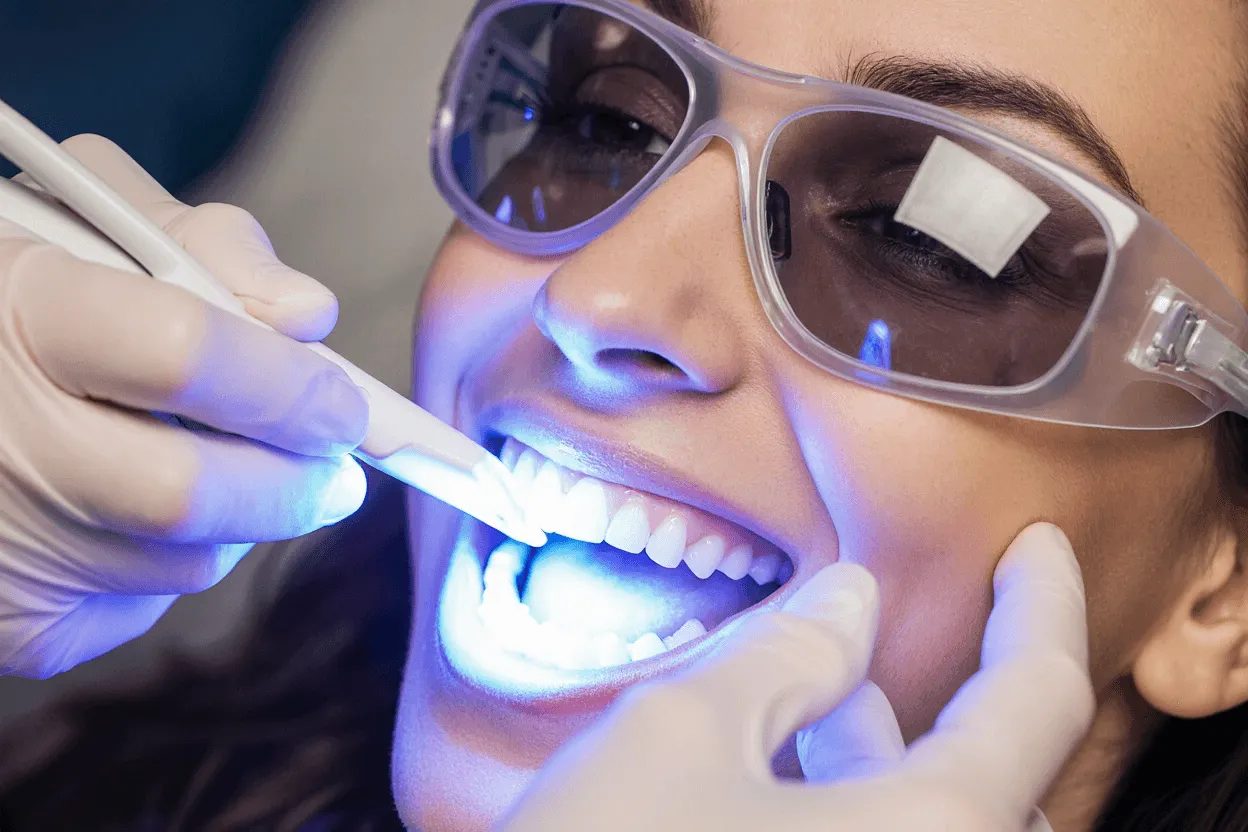
Teeth whitening is a cosmetic procedure that aims to lighten the colour of natural teeth. It can be carried out in the clinic (in-office whitening) or at home with custom-made trays under a dentist’s supervision. The teeth and gums are examined first, because decay, gum problems and existing fillings or crowns affect the result — restorations do not change colour. Temporary sensitivity can occur, and the shade achieved and how long it lasts vary from person to person.

  • In-office whitening
  • At-home whitening with custom trays
Clear aligner

Orthodontic Evaluation and Treatment

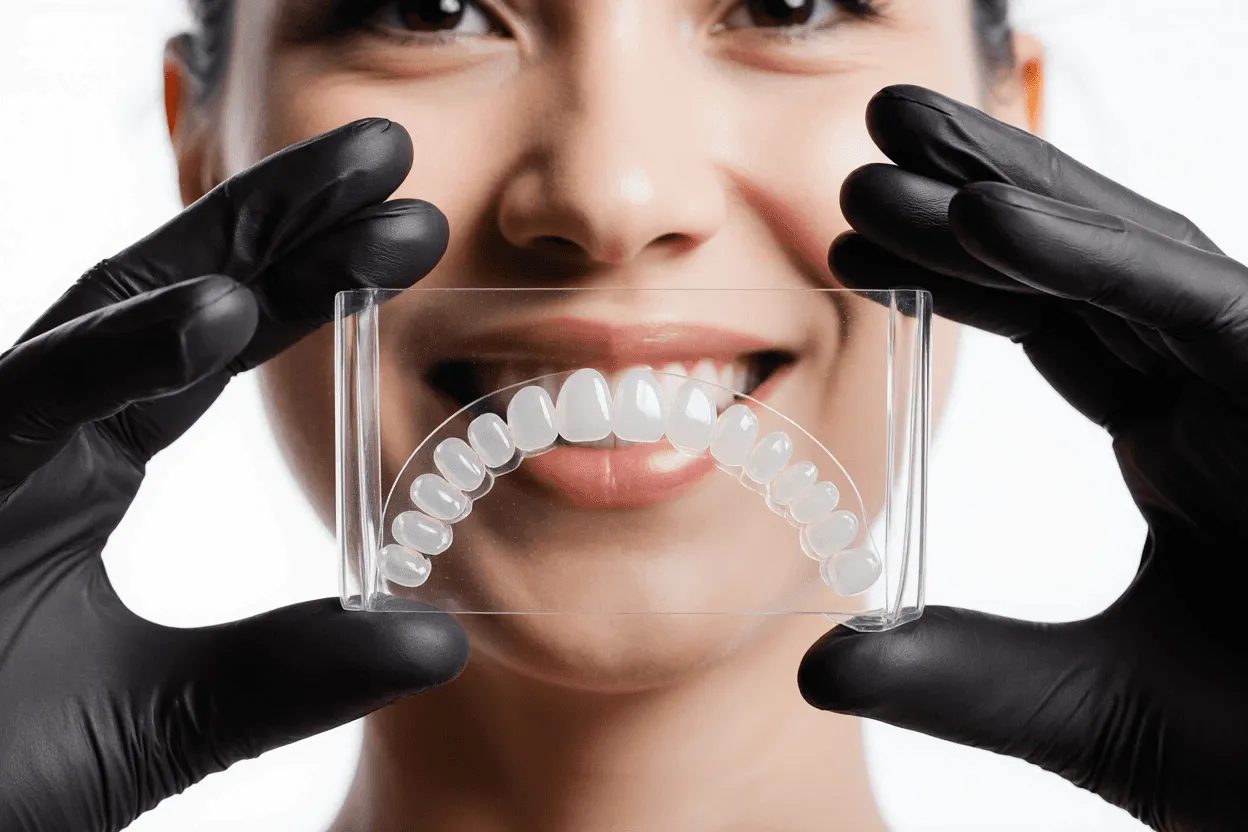
Orthodontic treatment aims to correct the position of the teeth and the bite. After an orthodontic evaluation, which may include photographs, X-rays and impressions, treatment can be planned with fixed braces or clear aligners. Clear aligners are removable, transparent trays made individually for each patient. Which method is appropriate, and how long treatment takes, depends on the type of misalignment and is determined individually.

  • Orthodontic evaluation
  • Fixed braces
  • Clear aligners
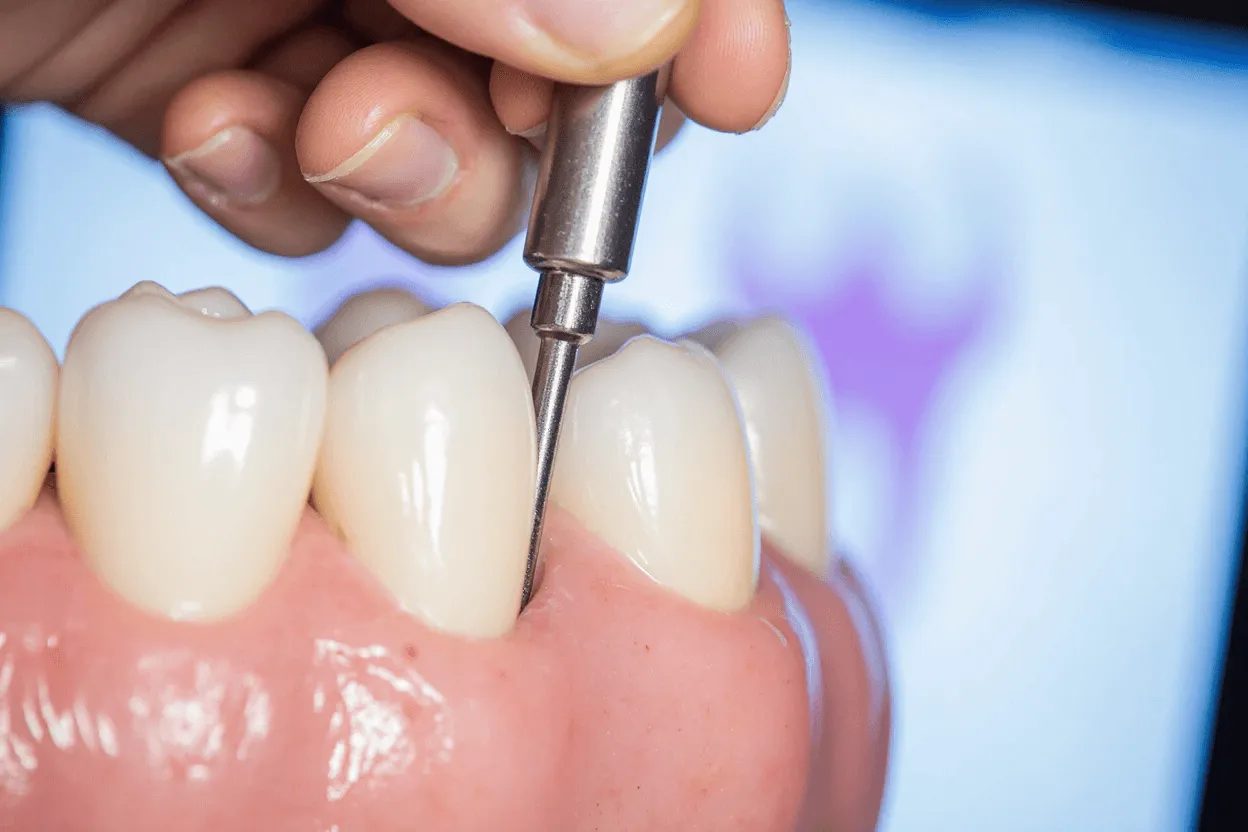
Dental implant model

Dental Implants

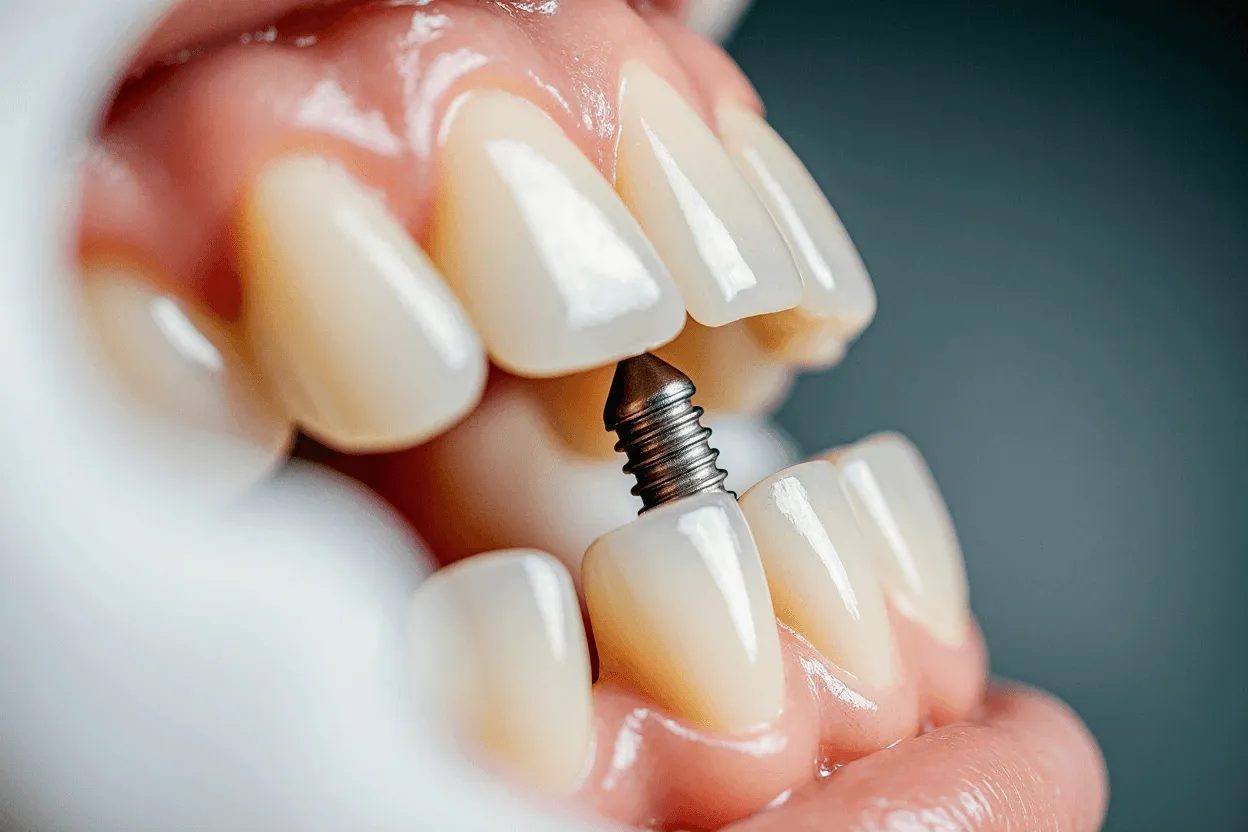
A dental implant is a post, usually made of titanium, that is placed in the jawbone to support a crown, bridge or denture. Implant treatment is one of the options for replacing missing teeth in suitable patients. Suitability is determined after a clinical examination and the necessary imaging, taking into account bone volume, gum health, general health and habits such as smoking. Treatment usually has several stages: placement under local anaesthesia, a healing period and then the final restoration. The duration and the long-term outcome depend on individual factors, oral hygiene and regular check-ups.

  • Single-tooth implants
  • Implant-supported bridges
  • Implant-supported dentures
Laser-assisted dental treatment

Laser-Assisted Dentistry

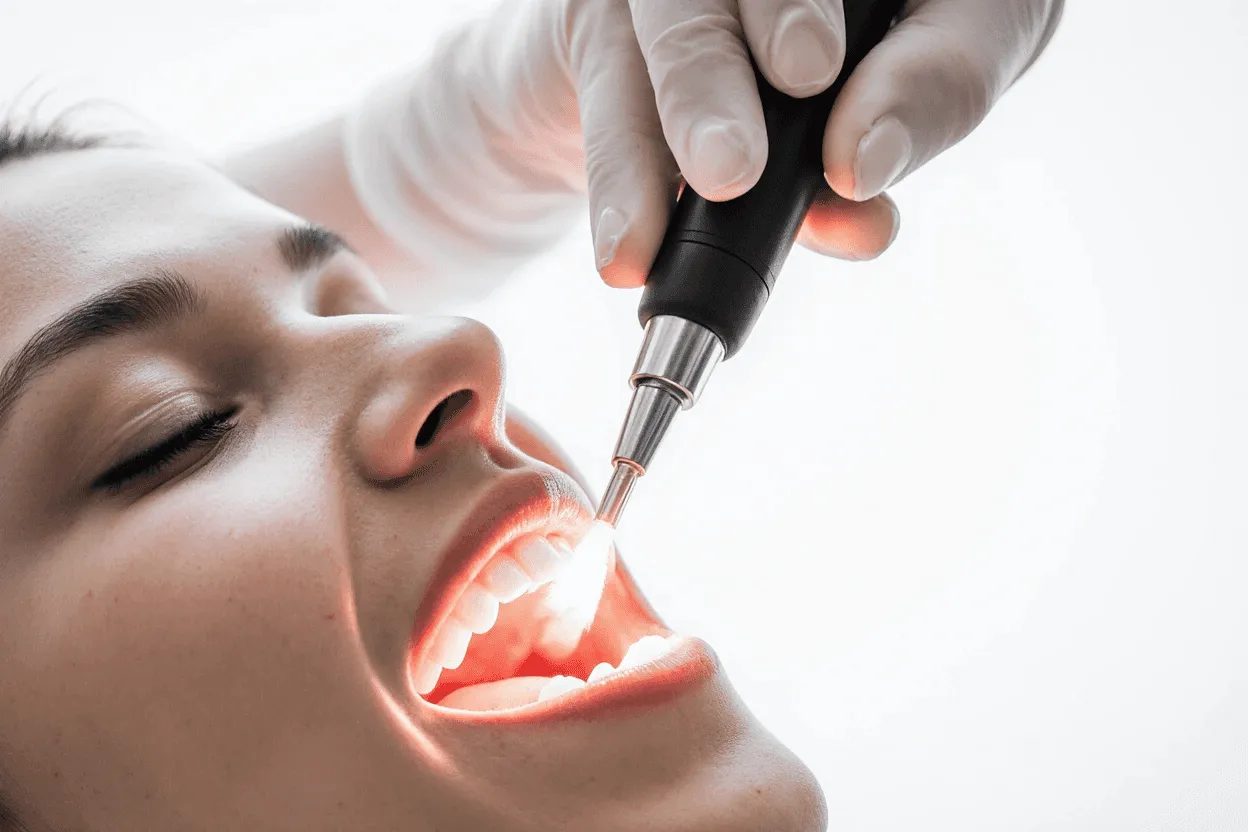
In laser-assisted dentistry, a dental laser is used as part of certain procedures, for example some soft-tissue (gum) procedures. Whether a laser is appropriate depends on the type of treatment and your clinical situation, and it is not suitable for every procedure. Your dentist will explain how a laser would be used in your treatment and what the alternatives are. Healing and comfort after treatment vary from person to person.

Cosmetic dentistry

Cosmetic Dentistry

Cosmetic (aesthetic) dentistry covers treatments concerned with the appearance of the teeth and gums, such as tooth-coloured fillings, veneers, crowns and whitening. Planning takes into account your facial features, smile line, tooth shape and colour, and the health of your teeth and gums. Health comes first: decay or gum disease is treated before cosmetic work begins. Options, limitations and long-term care are discussed with you before treatment.

  • Tooth-coloured (composite) restorations
  • Porcelain veneers
  • All-ceramic crowns
Smile analysis

Smile Design

Smile design is the planning stage of cosmetic treatment. Photographs, measurements and models are used to assess tooth proportions, the gum line and the relationship between teeth, lips and face. Where appropriate, a trial version (mock-up) can show the planned changes before treatment. The treatments chosen — for example whitening, veneers or crowns — depend on the examination findings, and the outcome depends on your individual situation.

  • Photo and smile analysis
  • Trial smile (mock-up)
  • Individual treatment plan
Ceramic crowns on a model

Zirconia Crowns

Zirconia is a ceramic material used for crowns and bridges. A zirconia crown covers the entire visible part of a tooth and may be considered for heavily restored or weakened teeth, on implants, or where strength is important, for example on back teeth. Placing a crown usually requires reducing the tooth on all sides, which cannot be reversed. Whether zirconia is appropriate depends on the condition of the tooth, your bite and your aesthetic needs; your dentist will discuss the material options with you.

  • Zirconia crowns
  • Zirconia bridges
  • Crowns on implants
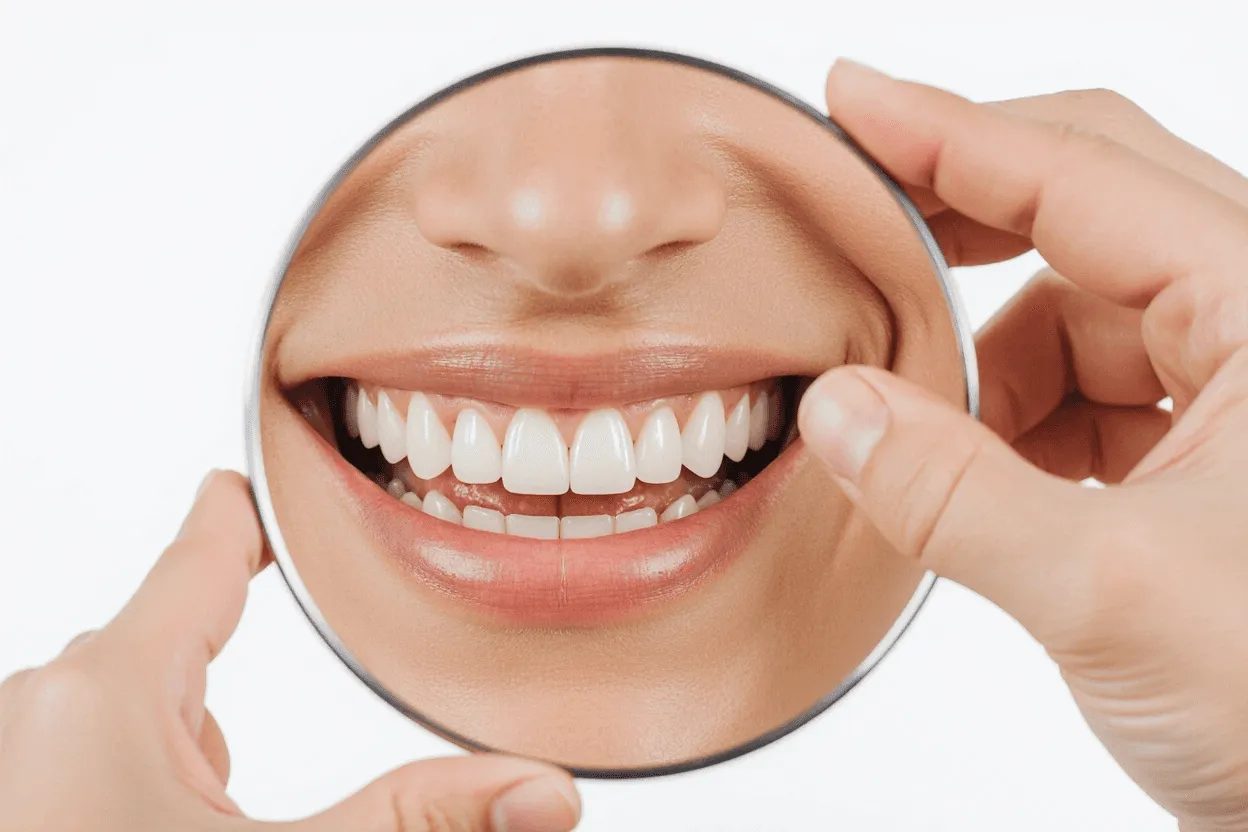
Close-up of a smile

E-max and Laminate Veneers

Laminate veneers are thin ceramic shells bonded mainly to the front surface of the teeth to change their shape, colour or proportions. E-max (lithium disilicate) is a glass-ceramic often used for veneers and single crowns because of its translucency. Preparing teeth for veneers usually involves removing a thin layer of enamel, which cannot be reversed; in some cases minimal preparation may be possible. Suitability depends on your teeth, gums and bite, and on habits such as teeth grinding.

  • E-max laminate veneers
  • E-max crowns

Frequently asked questions

General answers to common questions. They do not replace an examination — your dentist will advise you on your individual situation.

How long does implant treatment take, and how many visits are needed?

It depends on bone quality, on whether additional procedures such as bone grafting are needed and on how your tissues heal. Implants usually need a healing period before the final teeth are fitted, so treatment is often completed in more than one stage. The expected number of visits is explained after examination and imaging.

Are dental implants suitable for everyone?

Implants are not suitable for every patient. General health, bone volume, gum health, smoking and some medications can affect whether implants are an option. Where bone is insufficient, additional procedures may be considered. Options and alternatives are discussed after examination and imaging.

Do teeth have to be reduced for crowns or veneers?

Crowns usually require the tooth to be reduced on all sides. Veneers generally require less reduction, and in some cases minimal preparation may be possible. Tooth preparation cannot be reversed, so the amount of preparation, the alternatives and long-term care are discussed with you before treatment.

Can adults have orthodontic treatment?

Teeth can be moved at any age as long as the teeth and gums are healthy. Whether braces or clear aligners are more appropriate depends on the type of misalignment and your bite. Treatment duration varies from person to person and is estimated after an orthodontic evaluation.

In which treatments are lasers used?

Lasers may be used in selected procedures, for example certain gum (soft-tissue) procedures. Whether a laser is appropriate depends on the treatment and your clinical situation; it is not suitable for every procedure. Your dentist will explain the options and alternatives.

Questions about treatment or appointments?

You can reach the clinic by phone or email Monday to Saturday from 09:30 to 18:30. Diagnosis and treatment planning take place at the clinic after an examination.

Phone

+90 505 974 7796

Mon – Sat, 09:30 – 18:30

Address

Cumhuriyet Mah., Gazi Mustafa Kemal Bulvarı No: 961 B/A, Davultepe, Mezitli / Mersin, Türkiye